Pyaasa
प्यासा
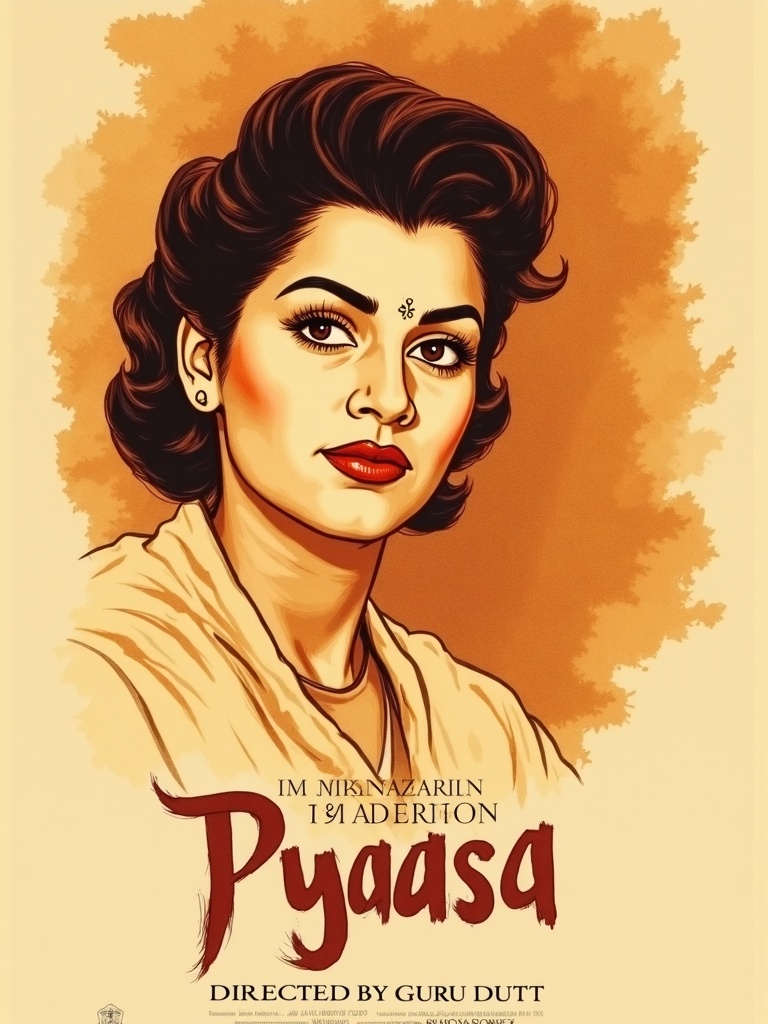
Vijay, an impoverished poet rejected by a world that values wealth over art, finds recognition only after he is presumed dead. A devastating critique of post-Independence Indian materialism.
If Mother India is Bollywood's national epic, Pyaasa is its soul. In some sense, they're bookends of 1957: one about the land, the other about the spirit. Both are about what happens when a society decides that money matters more than people.
Guru Dutt cast himself as Vijay, the doomed poet, and the autobiographical threads are impossible to ignore. Dutt was at the height of his powers — directing, producing, starring — and yet the film is steeped in melancholy. Vijay's poems, written in real life by Sahir Ludhianvi, are not film songs in the traditional sense; they're indictments. "Jinhe Naaz Hai Hind Par Woh Kahan Hain" ('Where are those who are proud of India?') was so politically sharp that it nearly got the film banned.
The visual language is extraordinary: cinematographer V.K. Murthy's chiaroscuro lighting turns Bombay's streets into a dreamscape of shadow and longing. The famous tracking shot — Vijay walking through a brothel district while singing "Yeh Duniya Agar Mil Bhi Jaaye" — remains one of the most perfect marriages of image, music, and meaning in cinema history.
Pyaasa was a commercial disappointment on release. It took decades for the critical consensus to catch up. Today it routinely appears on lists of the greatest films ever made, and the Criterion Collection's 2011 restoration introduced it to a generation of cinephiles worldwide.
Enjoying this? Mehfil launches 21 July 2026.
Join the waitlistWhere to Watch
Mehfil does not host or stream films. These are links to legal, authorized platforms.