Mughal-e-Azam
مغلِ اعظم
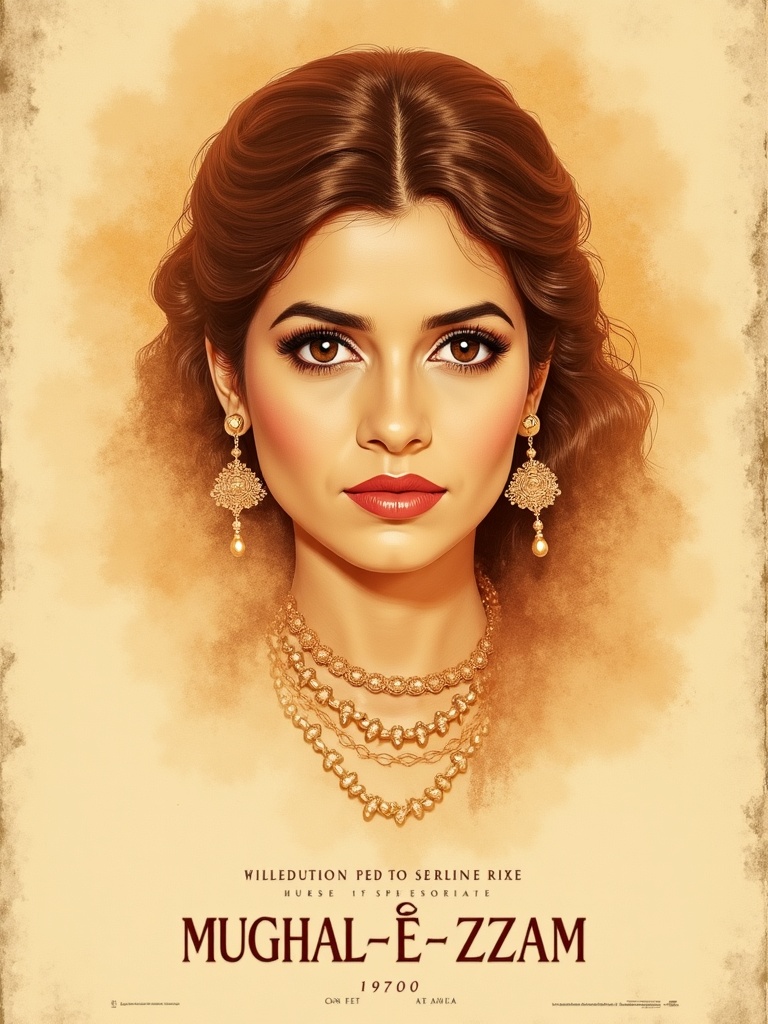
Emperor Akbar\'s son, Prince Salim, falls in love with a court dancer, Anarkali. The emperor's refusal to accept the match triggers a rebellion — and a story of forbidden love that shattered every box office record in Indian history.
Mughal-e-Azam took 14 years to make. K. Asif began shooting in 1946 — before Partition, before the Republic — and released it in 1960, having outlasted three financiers, a war, and the complete re-shooting of every scene that featured the original female lead.
The result is not just a film; it is an artifact of a particular moment in South Asian cultural history when "Indian" and "Muslim" cultural traditions were not seen as separate or opposed. The film is set in the Mughal court — a Muslim dynasty ruling a Hindu-majority subcontinent — and its aesthetic draws equally from Persian miniature painting, Urdu poetry, and classical Indian dance. The famous song "Pyar Kiya To Darna Kya" ('If I have loved, why should I fear?'), performed by Madhubala in the Sheesh Mahal (Palace of Mirrors), is shot entirely in reflection — Anarkali is multiplied into infinity, her defiance echoing across every surface.
The dialogue, written in a heightened Urdu by Amanullah Khan, is so famous that Indians who have never seen the film can quote it: "Anarkali, tumhara khoon khoon aur mera khoon paani?" ('Anarkali, is your blood blood and mine water?'). The film cost more than any Indian film had ever cost. It earned more than any Indian film had ever earned. It held the all-time record for 15 years, until a little film called Sholay came along.
Enjoying this? Mehfil launches 21 July 2026.
Join the waitlistWhere to Watch
Mehfil does not host or stream films. These are links to legal, authorized platforms.